Timetable

to star items.


Time zone: Europe/Madrid
- Registration desk open
- Session 1 [90 minutes] Universitat de Barcelona
- Break
- Session 2 [120 minutes] Universitat de Barcelona
-
-
OVERBURDEN posterZumzeig Cinema Location

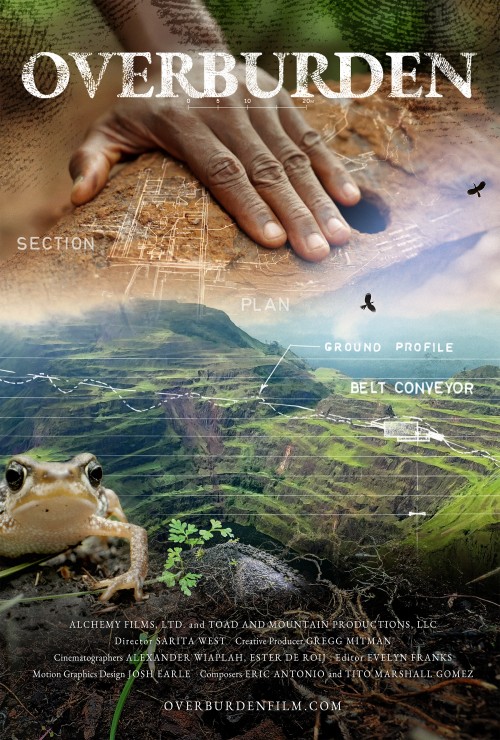
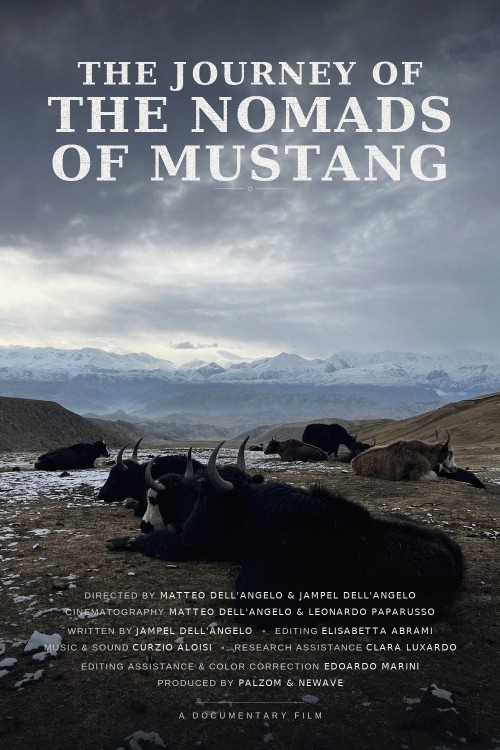
OVERBURDEN is a feature documentary set in the mist-shrouded Nimba Mountains on the Liberia–Guinea border, where rare wildlife and local communities reclaim a landscape scarred by mining. Today, this fragile recovery faces a new threat: a global steel company using conservation promises to brand a new mining venture as green.

Director: Sarita West
Creative Producer: Gregg Mitman
Duration: 76 minutesCountry of Origin: Germany, USA
Language: English (Liberian) with English subtitles
Year of Production: 2026
- Registration desk open
Hotel Exe Campus, Universitat Autònoma de Barcelona

-

For more information on the plenary format and plenary bios please refer to the Plenary Page.


Farhana Sultana (15 mins)

Title: Authoritarianism Beyond the Regime: Environmental Publics, Capitalist Accumulation, and Structural Persistence

This intervention argues that authoritarianism cannot be understood apart from the capitalist development model it serves, and that environmental publics, the heterogeneous formations constituted through shared exposure to ecological harm, offer a diagnostic lens for understanding this fusion. I draw on cases from Bangladesh, where a student-led mass uprising overthrew a fifteen-year authoritarian regime in 2024, to examine how the accumulation model produced ecological distribution conflicts, suppressed the publics that contested them through state-corporate violence and security legislation, and depoliticized environmental claims through development governance and techno-politics. The revolution toppled the regime, yet the structural conditions that enabled authoritarian governance, crony capitalism, the security apparatus, the entrenched development model, persist beyond it. The Bangladesh case demonstrates that authoritarianism, read through the formation and suppression of environmental publics, operates as a structural condition that can outlast any single regime, even those toppled by revolution.


Murat Arsel (5 mins)

Title: Authoritarianism and heterodox economic thought

Contemporary authoritarian leaders have long been able to distance themselves from the problems created by neoliberal globalisation. They were also able to position themselves in the eyes of the electorate as being best placed to implement painful but putatively inescapable policies that would ultimately deliver growth and prosperity. After two decades of false promises, we can now see a surprising turn in the policies they advocate. They are now appropriating proposals that used to be championed by the progressive left such as the need for industrial policy and barriers to free trade.


Peter Bori (5 mins)

Title: An authoritarian 'environmentalism': power concentration and delegitimization in the Green Transition under Hungary's Orbán regime

I present a case-based analysis of how Viktor Orbán's Fidesz government used its autocratic governing capabilities to dismantle environmental oversight, which paved the way for controversial and ecologically damaging green industrial developments, including battery factories and large scale solar parks. It then outlines how the government used its discursive power to construct its own self-proclaimed 'rational' environmental narrative, which it used to delegitimise opposition to such projects.  The case is used to formulate how authoritarian logic results in Green Transition projects shaping further power concentration, dispossession and ecological destruction - all under the banner of sustainability. 


Emiliano Teran Mantovani (5 mins)

Title: New Authoritarianism in Latin America and the Carribean

Although authoritarian trends and governments in Latin America and the Caribbean are not new, we are witnessing a regressive period in the region that could be traced back to 2015. A new phase of authoritarianism has emerged, much more aggressive against democratic systems and social and environmental rights. While it bears a strong mark of the right and far right movements, this is not exclusive to them, as we see in the cases of Venezuela and Nicaragua. I focus especially on the close links and feedback relations that are happening between this most recent wave of authoritarianism and extractivism, and how the latter is reshaped by the first. I emphasize on the Venezuelan case, aiming to highlight the differentiated and shared patterns among other countries. The strengthening of colonization processes toward ‘new commodity frontiers’; the promotion of higher levels of ‘lootability’; and the links between state corruption, impunity and organized crime, are also stressed. Furthermore, I explore the Amazonian indigenous resistances in these complex contexts, which are mainly guided by survival strategies that can be contradictory but are also deeply political.


Thabit Jacob (5 mins)

Title: Title: Authoritarianism trend and continuities in Tanzania

In light of the recent deadly post-election crackdown in Tanzania that killed thousands in 2025, my intervention in this panel will focus on recent trends in authoritarian tendencies, autocracy and democratic backsliding. President Samia Suluhu took power in 2021 after the death of her predecessor, the authoritarian populist John Magufuli. Suluhu promised to usher in a new era of reforms after years of autocracy, and she initially inspired widespread optimism both domestically and internationally, but the country reverted to authoritarianism and widespread repression. I argue that the October 2025 massacre which has been called Tanzania’s Tiananmen Square moment represents a case of authoritarian continuities and slow autocratization which created resentment that remained largely silenced but culminated with the deadly protests last year. What makes the recent wave of authoritarianism different this time it is the fact that it catalyzed mass action and inspired young Tanzanians to protest repression and democratic backsliding in the face of extreme state violence and brutal crackdown. I also argue that under the current wave authoritarianism, public intellectualism in Tanzania hasn’t lived up to its promises with scholars both young and old facing various structural constrained within public universities.

-
Workshops & Events
- Lunchbreak Workshop Session
-
For more information on the plenary format and plenary bios please refer to the Plenary Page.

Sara Mingorria Martinez (15 mins)

Title: When territories persist: infrastructures, resistance and collective futures

In September 2021, around 90,000 people mobilised in Barcelona against the expansion of El Prat airport, in one of the largest protests in Spain after the COVID-19 pandemic. The protest took place just days after the Spanish government had already announced the temporary suspension of the project. Since then, Zeroport — a platform advocating for the degrowth of the airport and port in Barcelona — has become a key reference point for social and environmental justice mobilisations in Catalonia, Spain and international networks such as Stay Grounded. This presentation explores how and why resistance persists beyond an initial victory, focusing on the role of territorial memory and the movement’s capacity to reframe airport expansion from a local infrastructure conflict into a broader struggle connected to touristification, the housing crisis, and wider questions of social and environmental justices. In doing so, the airport becomes understood not simply as a transport infrastructure, but as a symbol of a broader top-down and growth-oriented economic and social model.


Camila del Mármol (5 mins)

Title: Emancipatory politics and radical imagination in the Catalan Pyrenees

I discuss how the “left-behind places” debate associates the idea of peripheral and underdeveloped territories with the spread of right-wing politics, but I identify a different direction. I examine the unfolding of an array of initiatives that plant the seed for novel ideological pathways to imagine alternative futures, arising from the Indignados anti-austerity movement born in 2011. I further analyze the changing conditions for the emergence of an emancipatory political subject in this European periphery, concretely a contesting social movement opposing a government proposal to hold the Winter Olympics. A wider array of actors came together to confront what was identified as an extractive model of economic production based on tourism, instead proposing heterodox paths for development.  I discussed the transformative potential and the limits of these variegated initiatives, as well as the degree to which they were capable of opposing the hegemonic development models in the region.


Lydia Gibson (5 mins)

Title: Reverberation

Gramsci’s description of authoritarianism is akin to that of a dying star’s supernova: the implosion of an unscrupulous ruling class that expands and engulfs before its collapse, scattering material and political implications like heavy metals out to orbiting classes in ways that strip them of hegemonic power. This “crisis of authority” comes precisely, Gramsci argues, from ‘the fact that the old is dying and the new cannot be born’. This grand and luxurious death – that incidentally arranges the cosmos and binds us in shared suffering – is one that is unfamiliar to many whose unending abrasions never shone down from a single, immiserating sun. The last few years has been characterised not just by rising authoritarianism, but also by repeated calls to join critical masses of resistance to bring specific injustices to the world’s attention. Quiet, everyday commitments to enduring and surviving are worthy of unwavering attention during periods of authoritarianism. The dignity, safety, and life-promoting conditions of and around these communities remain as important as those now visible on the world’s stage. Also, unevenness of visibility, obscurity of sacrifices, and the positions often caught in geopolitical crossfire all tell us something about the totality of waves radiating across the cosmos. These remarks focus on reverberation; not echoes that singularly reflect authoritarian waves, but, rather, an attempt to apprehend the diffused, superimposed, complex blend of authoritarian reflections that remote and removed spaces afford us. 


Asmita Kabra (5 mins)

Title: Counter-hegemonic responses to authoritarian conservation in postcolonial India.

The project of fortress conservation in postcolonial India has historically been authoritarian, championed by a forest bureaucracy invested in violent separation of people from nature, imposition of elite environmental subjectivities, and devaluation of local ways of relating with more-than-human worlds/ cosmologies. Authoritarian conservation regimes require continuous physical, legal, and discursive work from above - for upholding their ideological legitimacy, and for making and implementing concomitant policies that attempt to restrict people’s access to biodiverse landscapes. Despite this, the fortress is constantly challenged and frequently breached from below. My long-term engagement with conservation landscapes as a pracademic reveals a complex web of local responses from human-nonhuman assemblages which (re)make these landscapes in unexpected ways, and produce the limits of authoritarian conservation. I will draw on my experience in forest-fringe villages in rural central India to explore how people and nature cope with and/or challenge fortress conservation through unlikely alliances and contingent claim-making. I will highlight the everyday politics of counter-territorialization by local communities, and discuss the moral tropes and beliefs on which counter-hegemonic imaginations and realities of forest-fringe lives are built.


Martin Hultman (5 mins)

Title: Ecological masculinities as exit politics.

Toxic-, petro- and industrial/breadwinner masculinities are all widespread critical political ecology concepts highlighting the configuration of bodies and patriarchy with misogyny, racist and climate denial standpoints. How can critical and engaged research help us exit from such destructive path? This short intervention suggests ecological masculinities praxes can be made attractive, nurtured, collective and transformative enough – without being co-opted by authoritarianism.

- Registration desk open
- Session 3 [90 minutes] Universitat de Barcelona
- Break
Universitat de Barcelona

- Session 4 [90 minutes] Universitat de Barcelona
- Break for lunch
- Lunch sessions Wednesday
- Session 5 [90 minutes] Universitat de Barcelona
- Break
Universitat de Barcelona

- Session 6 [120 minutes] Universitat de Barcelona
- Registration desk open
- Session 7 [90 minutes] Universitat de Barcelona
- Break
Universitat de Barcelona

- Sessions at Maritim Museum 1
- Session 8 [90 minutes] Universitat de Barcelona
- Break for lunch
- Lunch sessions Thursday
- Sessions at Maritim Museum 2
- Session 9 [90 minutes] Universitat de Barcelona
- Break
Universitat de Barcelona

- Session 10 [120 minutes] Universitat de Barcelona
-

For more information on the plenary format and plenary bios please refer to the Plenary Page.


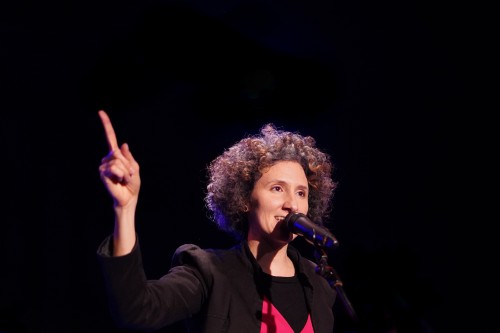
On Thursday early evening, in the Maritime Museum we will invite, four commentators to offer short reflections on what they have experienced, learnt and been challenged by during POLLEN 2026. The session will be chaired by Rosaleen Duffy, and our speakers are Elia Apostolopoulou, Christos Zografos, Farhana Sultana and Felipe Milanez.
- Registration desk open
- Session 11 [90 minutes] Universitat de Barcelona
- Break
Universitat de Barcelona

- Session 12 [90 minutes] Universitat de Barcelona
- Break for lunch
- Lunch sessions Friday
-

The European Research Council is the first pan-European funding body for frontier research, set up in 2007 to substantially strengthen and shape the European research system. The ERC is now part of the 'Excellent Science' pillar of Horizon Europe, with a budget of €16 billion and it aims at encouraging the highest quality research in Europe through competitive funding, and at supporting investigator-driven frontier research across all fields on the only basis of scientific excellence.

The ERC funding schemes are open to top researchers of any nationality or age who wish to carry out their research in a public or private research organisation located in one of the 27 EU Member States or in associated countries.  There are four core funding schemes:

  • Starting Grants: for researchers with 2-7 years of experience since completion of PhD, with a scientific track record showing great promise (grants up to €1,5 million for five years);
  • Consolidator Grants: for researchers with over 7 and up to 12 years of experience since completion of PhD, with an excellent mid-career scientific track record (grants up to €2 million for five years);
  • Advanced Grants: for established and scientifically independent researchers with a recent research track-record and profile which identifies them as leaders in their respective fields of research (grants up to €2.5 million for five years).
  • Synergy grants: 2-4 researchers working together to address a major scientific challenge which would require them working in synergy to tackle. (€10 million for up to 6 years)

In all cases, the sole evaluation criterion is the scientific excellence of the research proposal and of the track record of the individual applicant. Proposals are evaluated by selected international peer reviewers, who are in charge of assessing and scoring the proposals. The ERC uses a typical panel-based system, and each call (apart from the synergy call) has panels grouped into three disciplinary domains that cover the entire spectrum of science, engineering and scholarship: Social Sciences and Humanities (SH), Life Sciences (LS), and Physical and Engineering Sciences (PE). Each panel is composed of around18 high-level scientists and scholars selected by the ERC Scientific Council on the basis of their scientific reputation, who make the recommendations for funding. In addition, the evaluations rely on input from remote referees external to the panel.

The session will focus on the funding opportunities for researchers, and provide tips for prospective applicants as well as novelties to the 27 Work Programme. ERC grantees will be invited to join the session and share as well their experiences in applying to the ERC. 

- Session 13 [90 minutes] Universitat de Barcelona
- Break
Universitat de Barcelona

- Session 14 [120 minutes] Universitat de Barcelona