Timetable
Log in to star items.
Time zone: Europe/Warsaw
Please sign up to stay informed on any changes to the planned location of Yoga in the Park.
Maryna Hobrzyk is a certified Hatha Yoga instructor. She has gained extensive experience through numerous workshops, as well as by working with therapeutic groups and athletes in Poland and Thailand. She has also worked and developed her yoga practice in India, following the Iyengar method, and has worked with martial arts athletes in Chalong, Thailand.
She is qualified to teach Hatha Yoga, medical pelvic floor training, classes for seniors, and healthy spine training incorporating elements of Pilates. She also has training in the fundamentals of body functioning according to Ayurvedic principles, having obtained relevant qualifications at an Ayurvedic medicine centre in Kannur, India.

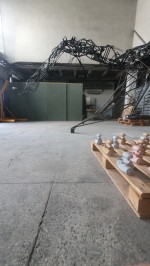
Visitors will have the opportunity to see SENSTER by Edward Ihnatowicz (1970), restored at AGH University of Krakow several years ago. This responsive cybernetic sculpture belongs to the first wave of media art and remains a landmark work at the intersection of art, technology, and robotics.
Alongside it, we will present a distinctly contemporary production by Hegel Industries — The Shenzhen Porcelain Army (2026), composed of a series of delicate figures. The work resonates with the ongoing expansion of Chinese technology companies and, in particular, with the emergence of a new category of globally traded technological products: robots.
Where to find the display location on Google maps
The Re Lab media art laboratory opens its doors to the public with a presentation of two large-scale installations — substantial, material, and physically imposing works. Both engage with technological imaginaries, and both emerge from the field of robotics. They also resonate with the conference’s central theme: a conversation about resilience, endurance, and future pasts.
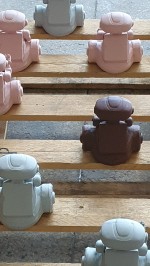
Visitors will have the opportunity to see SENSTER by Edward Ihnatowicz (1970), restored at AGH University of Krakow several years ago. This responsive cybernetic sculpture belongs to the first wave of media art and remains a landmark work at the intersection of art, technology, and robotics. Alongside it, we will present a distinctly contemporary production by Hegel Industries — The Shenzhen Porcelain Army (2026), composed of a series of delicate figures. The work resonates with the ongoing expansion of Chinese technology companies and, in particular, with the emergence of a new category of globally traded technological products: robots.
Where to find the display location on Google mapsPI: Exploring Resilient Futures
In the opening plenary, we plan to discuss the future by examining several key aspects: What are the possible future scenarios? Can we hope for greater equality, or should we expect worsening inequality? Will we be able to minimize the impact of the environmental catastrophe? Will science and technology come to the rescue? To what extent can STS contribute to the critical reflection on current future scenarios? What is, and what should be, the role of STS in this context? Is our future (and our social imagination) captured, and if so, by whom? Do we need a new imagination, metaphysics, or common sense to renew our futures? Finally, to what extent can experimentalism as a mode of governance help us break out of the current predicament and its accumulated problems, which stem in part from years of neoliberal organization?
Please notice: online attendance is to view only, no questions will be taken from online participants
Discussion Moderator:
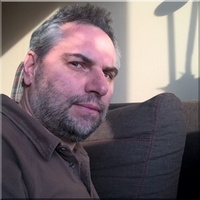
Krzysztof Abriszewski is an Associate Professor of Cultural Studies and Head of the Department of Ethnology and Cultural Anthropology at Nicolaus Copernicus University. His primary research focuses on Actor-Network Theory, cultural theory, and popular culture. He is currently involved in the project titled Social Circulations of Knowledge in Practices of Human and Social Sciences. Among his other publications, he co-edited (with A. Derra and A.W. Nowak) the volume Polish Science and Technology Studies in the New Millennium (Peter Lang, 2022).
Speaker Information:
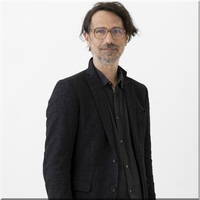
Ignacio Farías is Professor of Urban Anthropology at Humboldt University, where he also directs the Georg Simmel Centre for Urban Studies and the Stadtlabor for Multimodal Anthropology. His research interests concern current ecological and infrastructural transformations of cities and the associated epistemic-political challenges to the democratisation of city-making. His recent work explores how (micro)climatological knowledge entered the field of urban planning, how heat, noise and wireless signals come to matter in contemporary urbanism, and how human health and multi-species cohabitation are negotiated in polluted waterfronts. He is also interested in doing urban ethnography as a mode of making cities with others (designers, initiatives, affected groups, policy makers) and by other means (moving from textual to material productions).
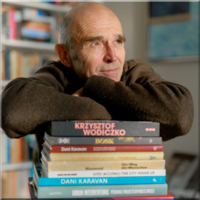
Maarten A. Hajer is distinguished interdisciplinary professor Urban Futures and Futuring at Utrecht University where he directs the Urban Futures Studio (UFS). He is probably best known for his seminal The Politics of Environmental Discourse (Oxford UP, 1995). His research combines discourse analysis with the analysis of dramaturgical dynamics. His most recent book is Captured Futures – Rethinking the Drama of Environmental Politics (co-authored by Jeroen Oomen, Oxford UP, 2025).
Hajer has always worked across disciplines but has also sought to enrich his academic work taking up positions outside academia. He held the top civil service position of Director-General of the Netherlands Environmental Assessment Agency PBL (2008-2015), acting as the chief science advisor to the Dutch Cabinet. He also acted as Chief Curator of the 2016 International Architecture Biennale Rotterdam (IABR) and as co-curator of the public exhibition and manifestation Places of Hope which was part of the official programme of Leeuwarden/Fryslan, Cultural Capital of Europe 2018. He is now preparing ‘That is where we want to live!’, a major manifestation in experiental futuring exploring possible futures for The Netherlands.
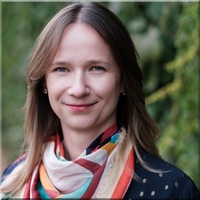
Aleksandra Lis-Plesińska is an Associate Professor in Social Anthropology at Adam Mickiewicz University in Poznań (AMU), Poland. She obtained a PhD degree at the Central European University in Budapest in 2013 with a dissertation on the politics of carbon markets the in European Union. She has worked on socio-technical transitions of energy and transport systems, public perceptions of technological risks and science-policy nexus in energy and climate politics. PI on a number of scientific projects, a former Fulbright Senior Scholar at UC Berkeley’s Center for Science, Technology, Medicine and Society and a research fellow at many European and U.S. based research institutions.
Please sign up to stay informed on any changes to the planned location of Yoga in the Park.
Maryna Hobrzyk is a certified Hatha Yoga instructor. She has gained extensive experience through numerous workshops, as well as by working with therapeutic groups and athletes in Poland and Thailand. She has also worked and developed her yoga practice in India, following the Iyengar method, and has worked with martial arts athletes in Chalong, Thailand.
She is qualified to teach Hatha Yoga, medical pelvic floor training, classes for seniors, and healthy spine training incorporating elements of Pilates. She also has training in the fundamentals of body functioning according to Ayurvedic principles, having obtained relevant qualifications at an Ayurvedic medicine centre in Kannur, India.
The Re Lab media art laboratory opens its doors to the public with a presentation of two large-scale installations — substantial, material, and physically imposing works. Both engage with technological imaginaries, and both emerge from the field of robotics. They also resonate with the conference’s central theme: a conversation about resilience, endurance, and future pasts.
Visitors will have the opportunity to see SENSTER by Edward Ihnatowicz (1970), restored at AGH University of Krakow several years ago. This responsive cybernetic sculpture belongs to the first wave of media art and remains a landmark work at the intersection of art, technology, and robotics. Alongside it, we will present a distinctly contemporary production by Hegel Industries — The Shenzhen Porcelain Army (2026), composed of a series of delicate figures. The work resonates with the ongoing expansion of Chinese technology companies and, in particular, with the emergence of a new category of globally traded technological products: robots.
Where to find the display location on Google maps
The Re Lab media art laboratory opens its doors to the public with a presentation of two large-scale installations — substantial, material, and physically imposing works. Both engage with technological imaginaries, and both emerge from the field of robotics. They also resonate with the conference’s central theme: a conversation about resilience, endurance, and future pasts.
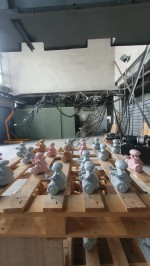 Visitors will have the opportunity to see SENSTER by Edward Ihnatowicz (1970), restored at AGH University of Krakow several years ago. This responsive cybernetic sculpture belongs to the first wave of media art and remains a landmark work at the intersection of art, technology, and robotics.
Alongside it, we will present a distinctly contemporary production by Hegel Industries — The Shenzhen Porcelain Army (2026), composed of a series of delicate figures. The work resonates with the ongoing expansion of Chinese technology companies and, in particular, with the emergence of a new category of globally traded technological products: robots.
Visitors will have the opportunity to see SENSTER by Edward Ihnatowicz (1970), restored at AGH University of Krakow several years ago. This responsive cybernetic sculpture belongs to the first wave of media art and remains a landmark work at the intersection of art, technology, and robotics.
Alongside it, we will present a distinctly contemporary production by Hegel Industries — The Shenzhen Porcelain Army (2026), composed of a series of delicate figures. The work resonates with the ongoing expansion of Chinese technology companies and, in particular, with the emergence of a new category of globally traded technological products: robots.
Where to find the display location on Google maps
PII: Out Of Silos
Reimagining the Relationships Between Science, Technology and Society
How can we rethink the relationships between science, technology and society in a world of increasing complexity, specialization, and rapid technological change?
Out of Silos brings together three leading STS scholars to explore what becomes possible when we move beyond the boundaries between disciplines, experts and citizens, and designers and users. Rather than seeking easy answers, the session invites productive disagreement and fresh perspectives on what meaningful collaboration, participation, and engagement might look like.
Together with the audience, we will ask: What do we gain by moving out of silos - and what might we need to change in the way knowledge is created, shared, and used?
Please notice: online attendance is to view only; no questions will be taken from online participants
Discussion Moderator:
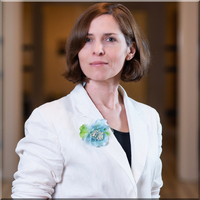
Aleksandra Wagner is a sociologist at the Institute of Sociology at Jagiellonian University in Kraków. Her research focuses on sociotechnical change, energy transitions, environmental sociology, public communication, and participatory processes. She is particularly interested in how societies negotiate and communicate complex technological and environmental transformations. She is also the founder of the Dialogue for Policy research group and has extensive experience in facilitating and moderating discussions, including those involving diverse or conflicting perspectives. Her work combines sociological research with practical engagement in policy and public dialogue.
Speaker Information:
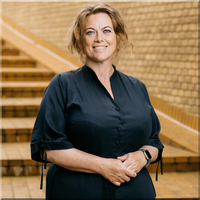
Maja Horst is professor and dean of Arts at Aarhus University. Previously, she has been Professor of Responsible Technology at the Technical University of Denmark and Head of Department and Professor of Science Communication at University of Copenhagen. She has also chaired the Board of the Independent Research Fund Denmark, which oversees the main public research councils. Prior to this, she was a member of the Danish research and innovation policy council advising the Danish parliament and science minister.
Her core research has been focused on public engagement with emerging controversial technologies, such as genetics and synthetic biology, stem cells, nanotechnology and artificial intelligence. More generally, her research interests have evolved around science and democracy, science communication, responsible research and innovation, as well as management and organization of research. She has published widely and has also been experimenting with interactive science communication installations inviting citizens to discuss the social responsibility of emerging scientific fields. For this, she was awarded the Danish Science Minister’s Communication Prize in 2009.
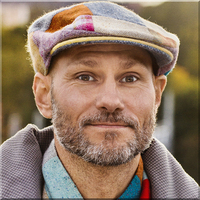
Sampsa Hyysalo’s research bridges S&TS, design participation, and innovation studies, focusing on how use and design can be arranged alternatively and to what effects. This has over the years lead to engagement in participatory design, codesign, open and user innovation, public participation, living labs, open design, maker spaces, peer knowledge creation, community innovation and citizen science. These engagements have been pursued in descriptive studies and through interventionist research, examining how new technologies shape, and can be shaped by, everyday life and everyday work. To achieve this he has been part of developing the biographies of artifacts and practices approach that blends longitudinal ethnographic studies and historical analyses to trace the contributions by different actors to design, innovation and wider sociotechnical change. His current work is focused on energy transition and citizen participation and in developing means by which diverse experts and stakeholders can better participate in the steering of sustainability transitions. Alongside he has studied for instances health technologies, participatory design at the public sector, organizational software and social media platforms. His latest books are Design participation (2025, Palgrave), Citizen Activities in Energy Transition (Routledge, 2021) and New production of users (2016, Routledge).

Jane Calvert is Professor of Science and Technology Studies at the University of Edinburgh. Her research is on the social studies of the life sciences. She works in close collaboration with scientists, engineers, artists, designers and policy makers. Much of her work has been on synthetic biology, but she is currently part of on an artist-led project called ‘Pollinator Pathmaker’, which designs gardens for pollinators rather than people. Her book A Place for Science and Technology Studies was published Open Access by MIT Press in 2024.
Come socialise and connect with fellow STS scholars over food, drink and music! During the event you will hear pieces from the EASST Competition winners, enjoy a musical performance from Paula and Karol, and have a chance to take to the dance floor.
This ticketed event must be purchased in advance.

There has always been a bit of music running through STS. Trevor Pinch didn’t just study the Moog synthesiser — he played them too with his band Electric Golem. More broadly, STS has long taken music seriously: as a site for studying technologies, instruments, infrastructures and creative practice, but also as something to experiment with, perform and simply make together.
So what better way to welcome everyone to Poland than with a well-known local indie-folk band that just happens to be co-led by an STS scholar?
 Paula & Karol were formed in Warsaw in 2009 by sociologist and STS researcher Paula Bialski and musician Karol Strzemieczny. Since then, the band has released five albums, toured extensively in Poland and abroad, and become a familiar part of the Polish indie scene. Their music is built around close harmonies, acoustic instruments, big choruses and the kind of warm, slightly unruly energy that comes from people who have been playing together for a very long time.
These days, the band lives across borders — most of the group is still based in Warsaw, while Paula lives in Switzerland — but they are currently working on new material. Following the 2025 single “Spin the Bottle,” another new song will be released just before the tour.
For this special Kraków show, Paula & Karol will perform as a four-piece, mixing songs from across their catalogue with brand-new material — and hopefully providing a suitably musical welcome to Poland.
Please sign up to stay informed on any changes to the planned location of Yoga in the Park.
Maryna Hobrzyk is a certified Hatha Yoga instructor. She has gained extensive experience through numerous workshops, as well as by working with therapeutic groups and athletes in Poland and Thailand. She has also worked and developed her yoga practice in India, following the Iyengar method, and has worked with martial arts athletes in Chalong, Thailand.
She is qualified to teach Hatha Yoga, medical pelvic floor training, classes for seniors, and healthy spine training incorporating elements of Pilates. She also has training in the fundamentals of body functioning according to Ayurvedic principles, having obtained relevant qualifications at an Ayurvedic medicine centre in Kannur, India.
The Re Lab media art laboratory opens its doors to the public with a presentation of two large-scale installations — substantial, material, and physically imposing works. Both engage with technological imaginaries, and both emerge from the field of robotics. They also resonate with the conference’s central theme: a conversation about resilience, endurance, and future pasts.
Visitors will have the opportunity to see SENSTER by Edward Ihnatowicz (1970), restored at AGH University of Krakow several years ago. This responsive cybernetic sculpture belongs to the first wave of media art and remains a landmark work at the intersection of art, technology, and robotics. Alongside it, we will present a distinctly contemporary production by Hegel Industries — The Shenzhen Porcelain Army (2026), composed of a series of delicate figures. The work resonates with the ongoing expansion of Chinese technology companies and, in particular, with the emergence of a new category of globally traded technological products: robots.
Where to find the display location on Google maps
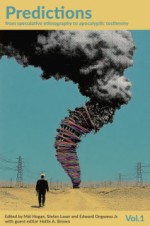
Mattering Press invites you to celebrate the publication of one of our new books: Predictions - Volume 1, edited by Mél Hogan, Stefan Laser and Edward Ongweso Jr, with guest editor Hollis A. Brown.
Join us for a glass of prosecco / orange juice and meet some of the editors and authors at 13:00 on Thursday the 10th September at the Mattering Press stall (main library, near the reception area).
PIII: Next Natures
Next Natures are not simply discovered, they are made. They emerge through technologies, material arrangements, infrastructures and sensory environments, as well as through new relationships between human and non-human actors. There is a particularly productive dialogue here between changing the relationship between nature and technology and exploration of machine vision as an earthbound technology: one that is always embedded in specific material and sensory environments. In conversation between panellists and together with the audience we will reflect if technologies first require environments, but eventually begin to produce environments of their own? How do machines perceive the worlds they inhabit—and how might machine vision become part of an emerging new ecology of perception? Finally: what kinds of next natures do we actually want to help bring into existence—and which ones would we prefer not to live in?
Please notice: online attendance is to view only; no questions will be taken from online participants
Moderator
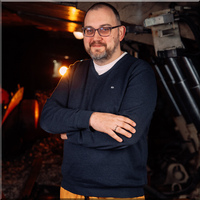 Jacek Gądecki is a sociologist and socio-cultural anthropologist, Professor at AGH University of Krakow, where he serves as Dean of the Faculty of Humanities. He is also the Chair of the Local Organising Committee for the EASST 2026 Conference. His research explores how spaces, objects and technologies shape everyday life. He is particularly interested in the relationships between materiality, technology and social life—from architecture and urban spaces to homes, workshops, libraries and makerspaces. His recent research focuses on making and tinkering as practices that not only produce things, but also create relationships and forms of social connection.
Speakers
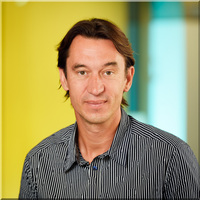
Dr. Koert van Mensvoort is an artist, technologist, and philosopher, and the driving force behind the philosophical concept of 'Next Nature.' This concept explores how our technological environment has become so complex and autonomous that it can be considered a nature in its own right. Van Mensvoort strives to understand and guide our co-evolutionary relationship with technology toward a future that is rewarding for both humanity and the planet.
As founder and director of the non-profit organization Next Nature, he initiates various projects that question our perspective on technology, including the NANO Supermarket, the Datafountain, and the In Vitro Meat Cookbook. Additionally, he is a fellow at Eindhoven University of Technology and a board member of the Society of Arts (KNAW). Van Mensvoort shares his insights worldwide through lectures and publications, including the book Next Nature: Nature changes along with us.
 Anna Olszewska is an art historian and cultural studies scholar. She is involved in STS research on machine vision, automation and landscapes, and is the author of the recent monograph Earthbound Visual Cultures (AGH University Press, 2025). A curator of a series of exhibitions on the history of ideas and visual culture. Her engagement with media arts originated in the Re:Senster project of cybernetic art restoration (2017-2019). She works as an adjunct professor at the Faculty of Humanities, AGH University of Science and Technology in Krakow.
The Re Lab media art laboratory opens its doors to the public with a presentation of two large-scale installations — substantial, material, and physically imposing works. Both engage with technological imaginaries, and both emerge from the field of robotics. They also resonate with the conference’s central theme: a conversation about resilience, endurance, and future pasts.
Visitors will have the opportunity to see SENSTER by Edward Ihnatowicz (1970), restored at AGH University of Krakow several years ago. This responsive cybernetic sculpture belongs to the first wave of media art and remains a landmark work at the intersection of art, technology, and robotics. Alongside it, we will present a distinctly contemporary production by Hegel Industries — The Shenzhen Porcelain Army (2026), composed of a series of delicate figures. The work resonates with the ongoing expansion of Chinese technology companies and, in particular, with the emergence of a new category of globally traded technological products: robots.
Where to find the display location on Google maps
Please sign up to stay informed on any changes to the planned location of Yoga in the Park.
Maryna Hobrzyk is a certified Hatha Yoga instructor. She has gained extensive experience through numerous workshops, as well as by working with therapeutic groups and athletes in Poland and Thailand. She has also worked and developed her yoga practice in India, following the Iyengar method, and has worked with martial arts athletes in Chalong, Thailand.
She is qualified to teach Hatha Yoga, medical pelvic floor training, classes for seniors, and healthy spine training incorporating elements of Pilates. She also has training in the fundamentals of body functioning according to Ayurvedic principles, having obtained relevant qualifications at an Ayurvedic medicine centre in Kannur, India.
The Re Lab media art laboratory opens its doors to the public with a presentation of two large-scale installations — substantial, material, and physically imposing works. Both engage with technological imaginaries, and both emerge from the field of robotics. They also resonate with the conference’s central theme: a conversation about resilience, endurance, and future pasts.
Visitors will have the opportunity to see SENSTER by Edward Ihnatowicz (1970), restored at AGH University of Krakow several years ago. This responsive cybernetic sculpture belongs to the first wave of media art and remains a landmark work at the intersection of art, technology, and robotics. Alongside it, we will present a distinctly contemporary production by Hegel Industries — The Shenzhen Porcelain Army (2026), composed of a series of delicate figures. The work resonates with the ongoing expansion of Chinese technology companies and, in particular, with the emergence of a new category of globally traded technological products: robots.
Where to find the display location on Google maps

A STS comic book on controversy analysis.
When students set out to investigate the toxicity of glyphosate, what was meant to be a simple STS project soon turns into a crisis. Guided by their lecturer, MITRA, they embark on research that draws them into the heart of one of the most contentious scientific controversies of our time. They uncover an unexpected reality about science itself.
An erudite and compelling work of fiction – a gripping narrative.
English and Spanish ebook and Print on Demand through Amazon.
French Hardcopy through https://bd-mitra.be/
The Re Lab media art laboratory opens its doors to the public with a presentation of two large-scale installations — substantial, material, and physically imposing works. Both engage with technological imaginaries, and both emerge from the field of robotics. They also resonate with the conference’s central theme: a conversation about resilience, endurance, and future pasts.
Visitors will have the opportunity to see SENSTER by Edward Ihnatowicz (1970), restored at AGH University of Krakow several years ago. This responsive cybernetic sculpture belongs to the first wave of media art and remains a landmark work at the intersection of art, technology, and robotics. Alongside it, we will present a distinctly contemporary production by Hegel Industries — The Shenzhen Porcelain Army (2026), composed of a series of delicate figures. The work resonates with the ongoing expansion of Chinese technology companies and, in particular, with the emergence of a new category of globally traded technological products: robots.
Where to find the display location on Google maps
We will gather at Mr. Black, a relaxed cocktail bar (with non-alcoholic options available). There will be no formal program, just come by (sign-up required, see below), grab a drink and mingle with other EASST attendees in a relaxed setting. We look forward to seeing you there!
This social is open to all interested EASST attendees, also those who did not attend the Networking embedded ethics sessions. Space is limited though, so please email magdalena.eitenberger(at)univie.ac.at if you would like to attend.
Please note that this is a self-pay event.
Unfortunately, the venue does not have a lift. If you require mobility assistance or have any accessibility requirements, please let us know when signing up so that we can make the necessary arrangements to ensure your needs are accommodated.