Timetable
Log in to star items.
Time zone: Europe/Warsaw
Opening words from the Chairperson of Local Organizing Committee Prof. Beata Bochorodycz and EAJS President Prof. Andreas Niehaus.
Greeting from UAM Rector, Prof. Bogumiła Kaniewska; Japan Ambassador to Poland, H.E. Akira Kono; Japan Foundation Executive Vice President, Dr. Aiko Doden and Toshiba Foundation, President Hiroki Yamazaki.
Followed by Ewa Płociennik (koto) and Shizuka Okumura (fortepian) concert.
Repertoire for the concert:
1. Fryderyk Chopin, Grande valse brillante, Op.18
2. Shin Miyashita 宮下伸, Koto 古都
3. Author unknown, Sakura (folk song)

Ewa Płociennik is a pianist from Wrocław and a graduate of the Paderewski Academy of Music in Poznań, and Chengdu University in China.
She studied Japanese Studies at Adam Mickiewicz University and spent a year at Tokyo Gakugei University, where she trained in traditional koto performance. Since 2020 she has been actively performing across Poland, both as a soloist and in collaborations with the Hibike choir and with Katarzyna Jaskólecka.

Shizuka Okumura-Wasiulewska is a Japanese-born pianist whose career spans acclaimed performances, international competitions, and advanced studies in Hiroshima and Poznań.
Honored as the top graduate of her year and awarded multiple prizes, she has trained with leading pedagogues and performed extensively in Japan and Poland. She currently works at the Grand Theatre in Poznań as a répétiteur and pianist, collaborating with celebrated international artists.
Keynote lecture by Prof. Manami Yasui.
Opening is wrapped up by a Trio Wasabi concert.
TrioWasabi brings together three scholars with a shared passion for chamber music: K. Cwiertka (piano), A. Giolai (flute), and B. Sevindik (violin). Driven by a constant curiosity to explore works related to Japan, we combine established repertoire with newly commissioned works and arrangements.
Repertoire for the concert
1. Yanada Tadashi, Jōgashima no Ame (1913) arr. Niek de Vente
2. Philip Seaton, Three Vignettes for Flute, Violin and Piano (2025)
3. Grażyna Bacewicz, Oberek nr. 1 (1949)
Between Life and Death: Emerging Perinatal Rituals in Contemporary Japan
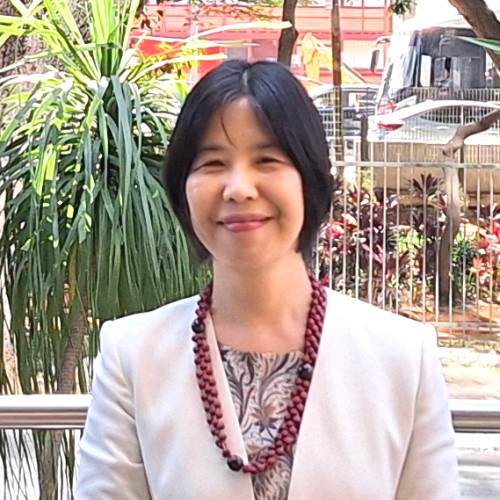
Manami YASUI
International Research Center for Japanese Studies
When a woman experiences a miscarriage or stillbirth, it is a shock, and she and her family often experience a grief which can persist for years. Today, Japan's Ministry of Health, Labour and Welfare conducts surveys on grief care for bereaved women, and provides information on medical institutions equipped to offer them support.
Yet this stands in sharp contrast to earlier practice. When Japan transitioned from home births to hospital births in the 1960s, relatives of the pregnant woman, along with hospital nurses and midwives, would typically console those who had suffered such a loss by telling them that the baby would simply be reborn. This was to encourage them to put the experience behind them as quickly as possible. In the 1980s, mizuko kuyō — Buddhist memorial rituals — became widespread at temples across Japan, and fetuses lost to miscarriage or stillbirth came to be mourned through these rites.
In more recent years, a variety of new practices have emerged: hospitals have developed their own rituals to mourn fetuses lost in this way, and women and families have begun creating memorial objects as a tangible testimony to the "lives" these fetuses lived. This talk introduces recent examples of perinatal rituals in order to explore the space "between life and death" in contemporary Japan, and argues that these emerging practices reflect a profound shift in how Japanese society recognizes and mourns perinatal loss.
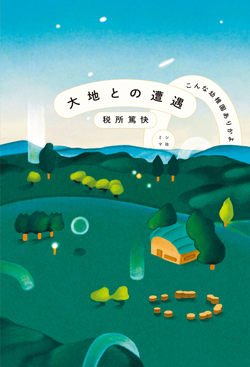
This Is a Kindergarten?!: Discovering Daichi 『大地との遭遇 こんな幼稚園ありかよ』
This book explores an alternative vision of education and family life through the author’s personal experience in rural Japan. After struggling with raising children in Tokyo, the author relocates to Obuse, a small town in Nagano, where he encounters the Waldorf kindergarten “Daichi.” There, children grow up immersed in nature—sledding down snowy mountains, camping under the stars, and gathering around bonfires for meaningful conversations. The book vividly recounts two transformative years spent alongside children, parents, and the founders of the school.
Blending memoir with educational reflection, the work presents a compelling model of “living well with children” in a time when such a life often feels difficult to achieve. With handmade facilities, organic farming, and a lifestyle that minimizes reliance on electricity and fossil fuels, the kindergarten embodies a philosophy centered on resilience, creativity, and the fundamental ability to sustain life. The book is also endorsed by Studio Ghibli producer Toshio Suzuki. It offers inspiration for educators, parents, and anyone seeking new ways of thinking about community, learning, and everyday life.
The talk will be held in conversation with Prof. SHIMIZU Yuichiro (Keio University), who is originally from Nagano, the region where the book is set.
Please note: The book talk will be conducted in Japanese.
Author
Atsuyoshi Saisho is an educator and social entrepreneur. At the age of 19, following a personal setback and inspired by a single book, he traveled to Bangladesh, where he founded e-Education, the country’s first video-based learning program. Starting from one of the poorest villages, Hamchar, the initiative supported students in gaining admission to the University of Dhaka, one of the nation’s top institutions.
He has since developed educational projects in diverse contexts, including Palestinian refugee camps in the Middle East and Somaliland in Africa. In 2021, he relocated to Obuse, Nagano, where he encountered the kindergarten “Daichi.” He is currently affiliated with the Graduate School of Saarland University in Germany. His publications include Forward! Forward! Forward!, Delivering the Best Education to the Ends of the World, Designing Schools of the Future, and I’d Like to Take Paternity Leave!. He is a father of three.
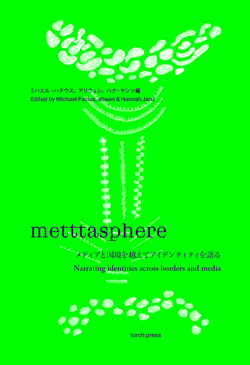
In this book talk, Michael Facius (Associate Professor at Tokyo College, The University of Tokyo) will be in conversation with Gabriele Vogt (Prof. for Japanese Society at LMU Munich) about his new book “metttasphere.
Narrating identities across borders and media,” which he co-edited with curator aliwen muñoz and Hannah Janz, former head of digital information at Goethe Institut Tokyo. The mettta project began with the question: “Who are we on social media?” and has evolved to examine issues of identity surrounding media, culture, and gender.
The metttafestival, held on October 1-2, 2022 as a collaboration between Goethe Institute Tokyo and Tokyo College, featured art exhibitions, performances, workshops, talks, and a philosophy café, creating a space for dialogue and reflection on identities.
The book compiles these efforts of many years as well as newly invited contributions into three sections: Mediated identities, Terroir: Migrations/ translations, and Queer & disabled post-identities. Published in late December 2025 by independent Japanese art book publisher torch press and designed by Daisuke Kano, the book features text printed in risograph and photographs and artworks in offset. Spanning 424 bilingual pages with contributions by 21 writers, it explores keywords including social media, transnationality, language, queerness, and accessibility.

Michael Facius
(Associate Professor at Tokyo College, The University of Tokyo)
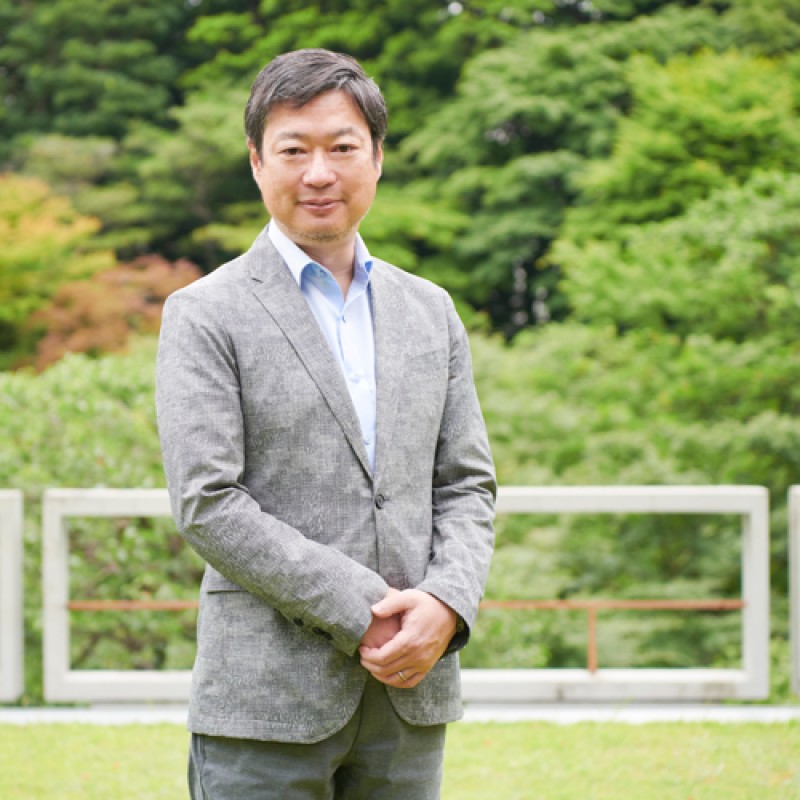
Japan’s Security Strategy in Transition: Revising the National Security Documents for a Contested Regional Order
Japan’s security policy has undergone a significant transformation over the past decade, culminating in the 2022 National Security Strategy, National Defense Strategy, and Defense Buildup Program. Yet the regional environment is changing faster than the institutional and operational foundations of this strategy. Intensifying U.S.–China competition, China’s expanding military activities, North Korea’s advancing capabilities, Russia’s war against Ukraine, and rapid technological change are reshaping the requirements of deterrence and defense. As Japan prepares the next revision of its strategic documents, the central challenge is to connect increased defense resources and new capabilities with a coherent and sustainable strategy. This keynote traces the evolution of Japan’s post-2012 security reforms, assesses the implementation gaps that have emerged since 2022, and considers how the next revision should integrate deterrence, alliance management, resilience, emerging technologies, and regional partnerships. It argues that Japan’s strategic effectiveness will depend not only on acquiring capabilities, but on aligning them with political purpose, operational concepts, and a credible vision of regional order.
Dr. Ken Jimbo is Co-Director of the Research Institute for Advanced Innovation and GeoStrategy (RAIS), Managing Director of Programs at the International House of Japan (IHJ/I-House), and Professor of International Relations at Keio University. He is concurrently an Adjunct Senior Research Fellow at the Canon Institute for Global Studies (CIGS) and an Associate Fellow at Chatham House. He served as Special Advisor to the Japan Ministry of Defense in 2020 and Senior Advisor to the National Security Secretariat from 2018 to 2020.
His main research interests lie in international security, Japan-U.S. security relations, emerging technologies and national security, and Japan’s foreign and defense policy.
He has served as a policy advisor for various Japanese governmental commissions and research groups, including those organized by the Ministry of Defense, the Ministry of Foreign Affairs, the Ministry of Economy, Trade and Industry, and the Ministry of Internal Affairs and Communications. His policy writings have been published by the RAND Corporation, NBR, the Stimson Center, Pacific Forum, The Japan Times, Nikkei, Yomiuri Shimbun, Asahi Shimbun, and Sankei Shimbun.
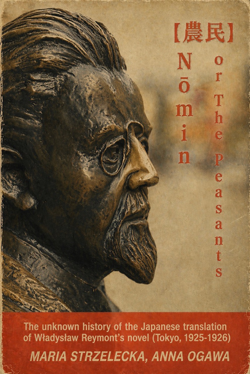
Nōmin [農民] or The Peasants
The unknown history of the Japanese translation of Władysław Reymont's novel (Tokyo, 1925-1926)
The upcoming meeting will feature a presentation of the research objectives and preliminary findings of The Nōmin project, conducted by Maria Strzelecka and Anna Ogawa, which aims to reconstruct the genesis and reception of the Japanese translation of Władysław Reymont’s novel, The Peasants, in Japan. A central focus of the analysis is a unique edition from 1925–1926, published in Tokyo shortly after the author was awarded the Nobel Prize. During the session, the authors will showcase this exceptional volume, a rara avis that serves as a century-old testimony to the work's Japanese publication history.
The research is grounded in previously unknown source texts, primarily correspondence that survived in the form of transcripts and copies from the destruction of World War II and the 1944 Warsaw Uprising. These materials allow for a initial reconstruction of the translation process undertaken by Asadori Katō in close collaboration with Stefan Łubieński in 1920s. A significant component of the event will be the reading of selected fragments of the novel in Japanese, intended to demonstrate the specific nature of the translation and the methods used to introduce Polish cultural realities to the Japanese public.
The results of these historical-literary inquiries have been presented in a pioneering open-access article, which is currently available for consultation: Nōmin [農民], czyli Chłopi. O japońskim wydaniu powieści Władysława Stanisława Reymonta (rekonesans) | Czytanie Literatury. Łódzkie Studia Literaturoznawcze This research addresses a significant scholarly gap in the history of Polish-Japanese cultural relations during the 1920s. The study not only elucidates the translators' methodology but also sheds new light on the presence of Polish literature within the Japanese cultural sphere, underscoring the importance of the authors' ongoing work in the coming years.
Authors

Anna Ogawa – has maintained a long-standing association with the Japanese Arakimunisairyu Iai school. Her professional expertise encompasses simultaneous interpreting from Japanese, as well as the translation of Japanese and Chinese poetry. Furthermore, she specializes in the scenic choreography of Kenbu, a performance art form originally developed by the samurai elite.
For many years, she served as a translator for Japanese radio and television networks. Her extensive pedagogical experience includes a long tenure in Japanese schools and preschools, alongside her role as a lecturer and instructor for the Japan Self-Defense Forces. As an active proponent of Japanese culture, she initiates numerous cultural events and has authored various articles and projects dedicated to its promotion. She also serves as a coordinator for Polish-Japanese development and cooperation.

Maria Strzelecka - Library Curator at the Special Collections Department of the University of Łódź Library and a PhD Candidate at the University’s Doctoral School of Humanities. She has authored and co-authored numerous articles, lectures, exhibitions, and projects dedicated to the preservation and promotion of Polish manuscript cultural heritage, the history of the Łódź region (specifically the turn of the 19th and 20th centuries), genealogy, and Japanese culture and art.
Beyond her academic and archival achievements, she is a passionate practitioner of traditional Japanese handicrafts, specializing in the intricate sakiori and zanshi ori weaving techniques. She shares her expertise and unique cultural insights through her acclaimed blog, Varia Iaponica, where she bridges the gap between historical scholarship and living tradition. A member of the International Group of Biographical Research (University of Łódź) and the Association of Polish Librarians.
Collegium Minus, Henryka Wieniawskiego 1, 60-702